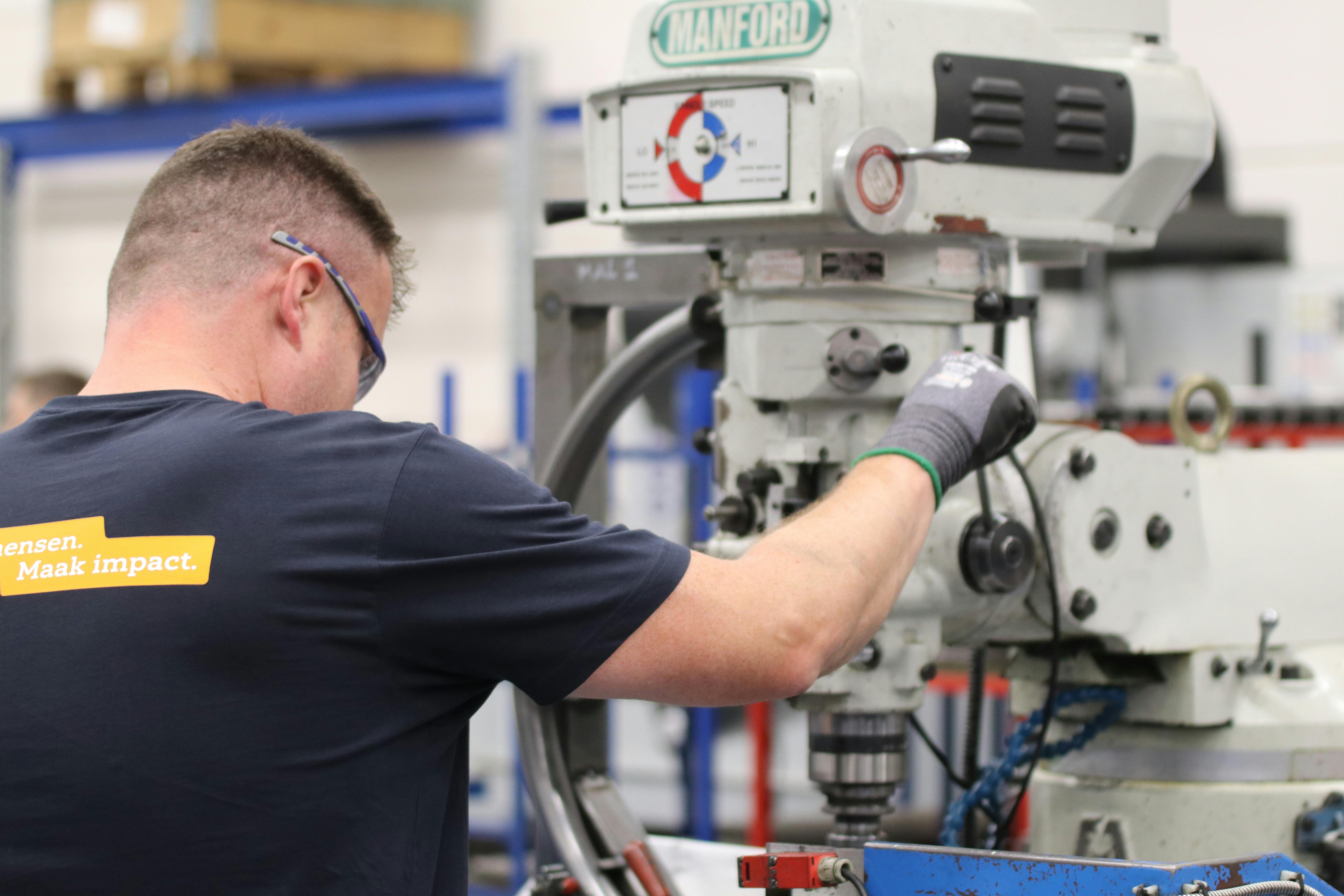
Field service operations in oilfield services and subsea equipment companies run on a combination of experienced technicians, informal communication, and collective memory. The crew lead knows which valve tool goes with which job. The dispatcher tracks four simultaneous mobilizations through a whiteboard and three phone calls. The project manager learns that a critical part did not ship by calling the warehouse.
This works until it does not. When a technician shows up without the right tool, when an invoice goes out six weeks after job completion, when a customer calls asking for a status that nobody internally has either, the cost is not just the immediate problem. It is the margin on the job and sometimes the relationship.
Automation does not replace the expertise. It replaces the informal communication layer that makes the expertise invisible and untrackable.
What Field Service Automation Actually Does
In oilfield services and subsea equipment, automation addresses four specific operational problems. These are not theoretical; they are the four places where time and money leak consistently.
Dispatch and Mobilization
The dispatch problem in field service is an information transfer problem, not a routing problem. When a job is assigned, the technician needs to know what the job requires, what equipment to bring, what the site access process is, who the customer contact is, and what the expected scope is. In most operations, that information travels through a supervisor phone call, a text message, a PDF attachment, and a verbal briefing in the parking lot.
Automation replaces that chain with a job record that the technician can access before they leave. The scope, the equipment list, the site instructions, the customer contact: all in one place, sent automatically when the job is assigned. The supervisor is not removed from the process. They stop being the bottleneck in it.
The implementation is usually a job management tool (ServiceTitan, Jobber, or a custom-built alternative depending on your ERP) with an automated notification flow: job created, technician notified, technician confirms, customer notified of window. For a subsea equipment company running five to fifteen concurrent mobilizations, this alone recovers four to six supervisor hours per week.
Job Status and Customer Communication
The customer call that starts with “I’m just checking in on the status of our job” is expensive. It interrupts whoever answers, requires pulling information from multiple sources, and introduces the possibility that the information is wrong.
In most field service operations, job status is known by the technicians on site and nobody else until they call in or drive back. The gap between when work is completed or when a problem is encountered and when anyone in the office knows about it can be hours.
A simple automation: the technician updates job stage from their phone (on site, work in progress, work complete, hold: waiting on part), and the customer receives an automatic notification at the stage transitions that matter. Not every update. The ones the customer is waiting for.
For subsea operations where the customer is a platform operator or a vessel coordinator with their own reporting requirements, this capability also means that job data flows into any report they need without a manual compilation step.
Parts and Equipment Tracking
The parts problem in field service takes two forms. Parts are not where they are supposed to be. Or parts are consumed on a job but not logged until invoice time, if they get logged at all.
The first problem is an inventory accuracy problem. The second is a job costing problem. Both require the same fix: a parts record updated in the field when parts are pulled, not reconstructed in the office afterward.
For subsea equipment companies managing specialized tools and assemblies (pressure testing equipment, ROV tooling, subsea valve actuators), the inventory accuracy problem is acute. A piece of equipment marked available in the system but actually on a vessel in the Gulf of Mexico is a scheduling failure waiting to happen.
Automation here means field technicians confirm parts and equipment on their device at the point of use. The record updates immediately. The office sees the current state. This is a discipline problem as much as a technology problem; the tool only works if people use it. But the technology needs to make the update fast enough that it is not an obstacle.
Invoicing and Billing
Field service invoicing is where the margin leak is usually largest and most fixable.
The pattern: job is completed, technician returns to the office, paperwork is submitted, office admin creates an invoice from the paperwork, invoice goes out. In the best case, this takes five to ten business days. In operations without a tight process, it takes three to six weeks.
The problem is not just cash flow timing, though that matters. The problem is that the invoice is reconstructed from memory and incomplete paperwork. Billable items get missed. Day rates modified in the field do not make it onto the invoice. Change orders verbally approved in the field do not get invoiced because nobody documented them.
Automation fixes this by connecting the job record to the invoice. When a job is marked complete, the draft invoice is created automatically from the job record: the labor, the parts pulled, the day rates, any change orders logged during the job. The office reviews and approves rather than reconstructing from scratch.
For a subsea equipment company doing 40 to 80 jobs per month at average invoice values of $15,000 to $60,000, a one percent improvement in billing accuracy on missed line items recovers real money. A three-week reduction in invoice cycle time is a cash flow improvement with immediate balance sheet impact.
A Worked Scenario: Subsea Valve Tool Deployment
A subsea equipment services company operates in the Gulf of Mexico. They maintain a fleet of subsea valve tools deployed to platform operators and vessel operators for scheduled maintenance windows.
Current state: dispatch is managed through a spreadsheet and group text. Technicians are notified by phone. Equipment status is tracked in a second spreadsheet, updated when the coordinator remembers. Job status is known by the field supervisor, shared with the office when they call in. Invoices are built from field tickets submitted by the technicians, usually two to three weeks after job completion.
Pain points: equipment scheduling conflicts every two to three months when a tool is not where the coordinator thinks it is. Customer status calls consuming two to three hours per week. Invoice reconciliation taking four hours per job on complex deployments.
After automation:
- Job creation triggers an automatic equipment assignment check against the live inventory. Conflicts surface immediately, not the day before mobilization.
- Technician receives job packet on their phone: scope, equipment, site contact, mobilization instructions.
- Equipment stage is updated by the technician at pickup, arrival on site, and return. The coordinator sees live status without calling.
- Customer receives automatic notification when technician is en route and when job is complete.
- Job completion triggers a draft invoice: day rates from the job record, equipment rental from the equipment log, consumables from the parts log, change orders from the field-logged change notes.
- Invoice is in the customer’s inbox within 48 hours of job completion.
The build for this is not a custom ERP. It is a configured job management tool, an equipment inventory table with a mobile update flow, and two automation rules connecting job stages to notifications and billing. Implementation in eight to twelve weeks. No new software category to learn. The technicians update one field on their phone instead of filling out a paper ticket.
What to Automate First
If you are choosing one thing to start with, choose the one that has the most visible downstream cost.
If your biggest problem is technicians showing up unprepared: Start with digital job packets and automated dispatch notification.
If your biggest problem is customer escalations about status: Start with automated customer status notifications at job stage transitions.
If your biggest problem is invoice cycle time or missed billing: Start with field-to-invoice automation that connects job completion to draft invoice creation.
Do not try to do all three at once. The discipline changes required in the field are real. Introducing multiple new behaviors simultaneously reduces compliance. One change at a time, proven, then the next.
The Technology Is Not the Hard Part
The tools that enable field service automation for a 20 to 80 person oilfield or subsea services company are available, affordable, and do not require an IT department to implement. The hard part is the process design: deciding exactly what information moves when, which fields are required versus optional, and how to handle the exceptions that your operation generates.
That process design work requires someone who understands field service operations, not just software. The technology choices follow from the process.
Finding Out What Applies to Your Operation
A 30-minute operational assessment covers your current dispatch, status, and billing workflows and identifies the specific automation opportunities. Not a category of software, but the actual flow that would apply to your jobs and your team.
No vendor pitch, no demo. An honest read of where the time and money are going and what it would take to recover it.